EnglishFrenchGermanSpainItalianDutchRussianPortugueseJapaneseKoreanArabicChinese Simplified
If you like the site do not forget to Subscribe to our mailing list

Enter your E-mail address:

Tuesday, February 26, 2013

Now! Gold nanocages could image and treat tumours

Gold has been used in medicine for centuries, but nanotechnology has given it an entirely new role. Researchers led by Younan Xia at Washington University in St. Louis have developed hollow gold nanostructures — called nanocages — that could simultaneously image tumors and deliver drugs to destroy them, all in a single platform.

The nanocages are extraordinarily small, about 50 nanometers in size, and their hollow interiors can be loaded with drug molecules. Their gold walls can be engineered to absorb near-infrared (NIR) light — wavelengths that pass through tissue relatively easily. When NIR light hits the nanocages, two things happen: they emit Cerenkov radiation that can be detected in imaging, and they convert the light to heat, which can kill nearby tumor cells through photothermal therapy.

The Cerenkov Imaging Advantage

Cerenkov luminescence imaging is a relatively new technique that detects visible light emitted when charged particles (like those from radioactive tracers) travel through tissue faster than light does in that medium. By incorporating gold-198 — a radioactive isotope — directly into the walls of the nanocages, the team created particles that are self-labeling. The gold-198 provides both the imaging signal and becomes a permanent, structural part of the nanocage. Because the isotope is built into the cage wall rather than chemically attached, there's no risk of it separating from the nanoparticle during treatment — a common concern with conventional nanoparticle labeling approaches.

Drug Delivery and Combination Therapy

The hollow interior of the nanocages can be filled with chemotherapy drugs or other therapeutic agents. By attaching targeting molecules like peptides to the outer surface, the team hopes to direct the nanocages specifically to tumor cells, minimizing harm to healthy tissue. Once at the tumor site, the nanocages could deliver drugs, apply photothermal heat, or both simultaneously.

This kind of multifunctional nanoparticle — one that can image, target, and treat — represents the direction that cancer nanomedicine is heading. Combining diagnosis and therapy in a single agent, sometimes called theranostics, could make cancer treatment more precise and more efficient than approaches that handle imaging and treatment as separate steps.


Source: Physics World

Tuesday, February 19, 2013

New process speeds conversion of biomass to fuels!

Furan ring opening process for biomass to fuel conversion

Opening furan rings into linear chains is a critical step in making usable fuels from biomass. (Image: Josh Smith, Los Alamos National Laboratory)

Converting plant material into liquid fuel sounds like a clean, elegant solution to our energy problems — and in many ways it is. But the chemistry involved is far from simple. Biomass-derived molecules often contain structures called furan rings, and breaking these open is a necessary step before the material can be turned into the kinds of alkanes found in gasoline and diesel. Getting this reaction to happen efficiently, without burning through enormous amounts of energy in the process, has been a major research challenge. A team at Los Alamos National Laboratory has now made real progress on exactly that problem.

The researchers worked out the detailed mechanism behind the key conversion steps, and found that the reactions can be carried out under relatively mild, energy-efficient conditions. That's important because industrial-scale fuel production needs to be economically viable, and energy-intensive chemical processes eat into both the cost savings and the environmental benefits of going bio-based in the first place.

The Case for Non-Food Biomass

What makes this line of research particularly appealing is that it uses non-food plant material — crop residues, grasses, wood waste — rather than edible crops. This sidesteps one of the main criticisms of first-generation biofuels like corn ethanol, which compete directly with food production. If biomass conversion can be made efficient at scale, it could provide a genuinely carbon-neutral liquid fuel, since the CO² released during combustion is balanced by the CO² the plants absorbed while growing.

There's also a strategic dimension. Many countries spend vast sums importing petroleum; a domestic biomass-to-fuel industry could reduce that dependency significantly. But the economics only work if the chemistry is clean, cheap, and scalable — which is exactly what understanding the reaction mechanism helps to achieve.

From Lab Insight to Industrial Process

Knowing how the furan-ring-opening reaction works at a mechanistic level gives chemists a foundation for designing better catalysts and optimizing reaction conditions. With the mechanism mapped out, engineers can begin building processes that bring biomass conversion from a laboratory curiosity to something that operates at the volumes needed to make a real dent in fuel supply. It's the kind of fundamental advance that doesn't make headlines on its own — but without it, the practical technology never gets built.


Source: Physics World

'wireless' solar cells proposed!!!

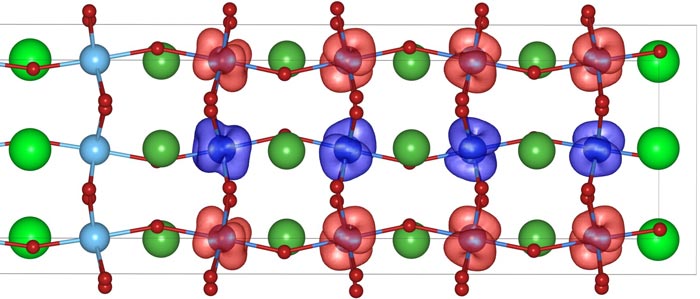
Multilayer lanthanum vanadate and strontium titanate structure for wireless solar cells
The proposed multilayer oxide structure that could act as a wireless solar cell.

One of the less-discussed challenges in solar cell design is getting electricity out of the device efficiently. Traditional solar cells rely on metal wire contacts to collect the current generated by light — and those contacts can cause losses and add manufacturing complexity. A new theoretical proposal aims to sidestep this problem entirely, using an unusual property of layered oxide materials to create a solar cell that doesn't need wires at all.

The idea centers on a phenomenon that occurs at the interface between two insulating oxide materials — lanthanum vanadate and strontium titanate. Despite both materials being insulators on their own, when layered together they form a two-dimensional conducting electron gas at the boundary. This interface conductivity is itself remarkable, but researchers have now proposed using the built-in electric field that exists at such interfaces to drive the separation of electron-hole pairs generated by sunlight — essentially doing the job that the internal field of a conventional p-n junction does in a standard solar cell.

Eliminating the Need for Metal Contacts

In this design, the interface itself would collect and conduct the photogenerated current, removing the need for external metal electrodes. That's the "wireless" part of the concept — not wireless in the sense of radio transmission, but in the sense that the device architecture doesn't depend on attached metal conductors to extract electrical energy.

Beyond the practical benefits, the proposal opens up interesting possibilities for integrating solar cells into transparent coatings and flexible surfaces where traditional metal contacts would be impractical. Oxide layers can be deposited with high precision using techniques like molecular beam epitaxy, giving researchers fine control over the interface properties.

A Concept Still on Paper

It's worth emphasizing that this is still a theoretical proposal — no working device has been built yet. The efficiency of such a cell and how it would perform in real-world conditions are open questions. But the physics is sound, and the ability to engineer electronic properties at oxide interfaces has been a hot area of research for over a decade. Whether this particular application pans out, it represents another creative way scientists are thinking about redesigning the solar cell from the ground up.


Source: Physics World

Wednesday, February 13, 2013

Reusable adhesive that liquefies under UV light Created "Interesting Video"

Reusable adhesive material that changes state under UV and green light

Adhesives are useful, but once most of them set, that's it — you're committed. Removing them usually means heat, solvents, or just tearing things apart. A team of researchers at Japan's National Institute of Advanced Industrial Science and Technology (AIST) has come up with something fundamentally different: an organic adhesive that can be switched between solid and liquid states simply by shining light on it.

The material works through a photochemical isomerization reaction. When exposed to UV light in the 365–385 nm range, the compound transitions from a solid adhesive state to a liquid. Shine green light on it and it solidifies again — ready to bond once more. The whole process is reversible and can be repeated many times, with no need for heat, cooling, or any chemical treatment. Just light.

How It Works

The underlying mechanism involves molecules that change their shape when they absorb specific wavelengths of light — a process called photoisomerization. In the solid phase, the molecules pack together in an ordered crystalline structure that gives the material its adhesive properties. UV light triggers a molecular flip that disrupts this packing and causes the material to melt into a liquid. Green light reverses the flip, and the material recrystallizes and becomes sticky again.

The fact that this works at room temperature without any thermal input is what makes it practically interesting. Many shape-changing or phase-change materials require significant temperature changes, which limits their usefulness in applications where precise control is needed.

Potential Applications

A reusable, light-switchable adhesive could find uses in electronics assembly, where components sometimes need to be attached and detached precisely without damage. It could also work in medical devices, precision optics mounting, and any situation where adhesion needs to be temporary and controllable. The fact that it uses only light — a clean, contactless stimulus — makes it particularly appealing for delicate or enclosed systems.

Check out the video below to see the material in action:


Source: Physics World

Stored photons interact in atom cloud!

Storing and manipulating photons in Rydberg atom cloud
Physicists have found a way to store photons in an ultracold atomic gas and make them interact.

Photons — particles of light — normally pass right through each other without any interaction. That's why you can cross two laser beams and nothing happens at the crossing point. But making photons interact with one another is one of the holy grails of quantum information science, because it would allow for the construction of all-optical logic gates and quantum computing devices that use photons instead of electrons. A new experiment has brought that goal meaningfully closer.

A team of physicists has demonstrated that by storing individual photons inside a cloud of ultracold rubidium atoms — held in an optical trap — they can make those photons interact strongly with one another. The trick involves using Rydberg states: highly excited atomic energy levels in which the electrons are very far from the nucleus. Rydberg atoms have enormous interaction radii, meaning one excited atom can influence its neighbors over long distances.

How the Photon Storage Works

When a photon enters the atom cloud, it can be converted into an excitation of the atomic gas — a quasiparticle called a "dark-state polariton" — through a process called electromagnetically induced transparency (EIT). In this state, the photon is essentially stored in the atoms. When the Rydberg level is involved, an excitation in one part of the cloud blocks any other photon from being stored nearby, because the Rydberg interaction shifts the energy levels in surrounding atoms out of resonance. This is called the Rydberg blockade.

The result is that photons stored in the cloud effectively push each other away — they interact repulsively. When the photons are released, they emerge having exchanged a quantum phase with one another — exactly the kind of controlled interaction needed to build photon-based logic gates.

Why This Matters for Quantum Computing

All-photon quantum computing has some attractive properties: photons travel fast, carry quantum information at room temperature, and don't easily lose their quantum state to the environment. The main obstacle has always been that photons don't naturally talk to each other. This experiment shows that using Rydberg-atom intermediaries, you can make them do exactly that. It's a significant step toward photonic quantum gates that might one day form the basis of practical quantum computers or ultra-secure quantum communication networks.


Source: Physics World

Physicists extract photons from diamond ring!!!!

Integrated diamond ring device for extracting single photons
The 4.5-micron diamond ring resonator at the heart of the new single-photon device.

Diamond might be known for its sparkle, but for quantum physicists it has an entirely different kind of appeal. Diamonds containing nitrogen-vacancy (NV) centers — spots where a nitrogen atom sits next to a missing carbon atom in the crystal lattice — can emit single photons on demand, making them highly attractive as light sources for quantum information applications. The challenge has always been extracting those photons efficiently into a usable optical signal. A team of US physicists has now built a compact integrated device that does exactly that.

At the heart of their design is a tiny ring of diamond, just 4.5 micrometers in diameter, that contains NV centers. The ring acts as an optical resonator: light bouncing around inside it builds up in intensity at specific resonant frequencies. When an NV center inside the ring emits a photon, that photon couples into the resonant mode of the ring and is guided out into an adjacent waveguide — a tiny channel that directs the light where it needs to go.

Why Single-Photon Sources Matter

Single photons are the building blocks of many proposed quantum technologies, from quantum key distribution for ultra-secure communications to linear optical quantum computing. To be useful, a single-photon source needs to emit photons reliably, at a well-defined frequency, and with the emitted photons all being identical to one another — a property called indistinguishability. NV centers in diamond tick many of these boxes, which is why so much effort has gone into engineering efficient ways to use them.

Previous approaches to coupling NV-center emission into optical fibers or waveguides often involved awkward external optics or significant photon losses. An integrated on-chip design like this ring resonator is a significant step toward practical, scalable devices.

A Step Toward Diamond-Based Quantum Devices

The work demonstrates that it's possible to integrate diamond photonic components — resonators and waveguides — at the microscale, which opens the door to more complex all-diamond quantum circuits. Diamond's hardness and chemical stability make it an attractive platform for photonic devices that need to operate in demanding environments. Bringing together the exceptional optical properties of NV centers with integrated photonic engineering represents a genuine advance in the field of quantum photonics.


Source: Physics World

Monday, February 4, 2013

Turning toxic by-product into Biofuel Booster

Here's an elegant example of turning a problem into a solution. Scientists at Brookhaven National Laboratory were studying an enzyme called ADO (aldehyde-deformylating oxygenase) that naturally produces alkanes — long carbon-chain molecules that are chemically similar to the hydrocarbons in gasoline and diesel fuel. The appeal of ADO is obvious: if you can get bacteria or algae to run this enzyme efficiently, you could produce biofuel that doesn't require any further processing before it can be used in an engine.

The catch was that the reaction kept stopping after just three to five cycles. The enzyme was essentially poisoning itself. The culprit turned out to be hydrogen peroxide: one of the electron transport proteins involved in the reaction was reacting with oxygen to generate hydrogen peroxide as a by-product, and that hydrogen peroxide was inhibiting ADO, shutting the whole process down.

A Simple Fix With a Big Impact

Once the team understood the problem, the solution was surprisingly straightforward. They introduced a second enzyme called catalase, which breaks down hydrogen peroxide into harmless water and oxygen. When both enzymes were present, the reaction didn't stop after five cycles — it ran for more than 225 cycles.

Taking this further, the researchers engineered a bi-functional enzyme by physically linking ADO and catalase together. The reasoning was that by keeping the two enzymes in close proximity, any hydrogen peroxide generated near ADO would be immediately neutralized by the attached catalase before it could build up to inhibitory levels. The results were impressive: in test tube experiments and pilot studies in bacteria, the bi-functional enzyme produced at least five times more alkane than ADO alone.

Why This Matters

Unlike ethanol, which is produced by fermenting sugars and still requires energy-intensive processing, alkanes produced biologically could potentially be used directly as fuel — extracted from the organism and pumped straight into an engine. That makes them a particularly attractive target for next-generation biofuels.

The team is now working on installing the bi-functional enzyme into algae and green plants, which could use sunlight to drive the entire process. It's a long road from lab demonstrations to industrial-scale fuel production, but solving the self-inhibition problem is a meaningful step in the right direction.


Source: Brookhaven National Laboratory

Diamond downsizes classical MRI and NMR

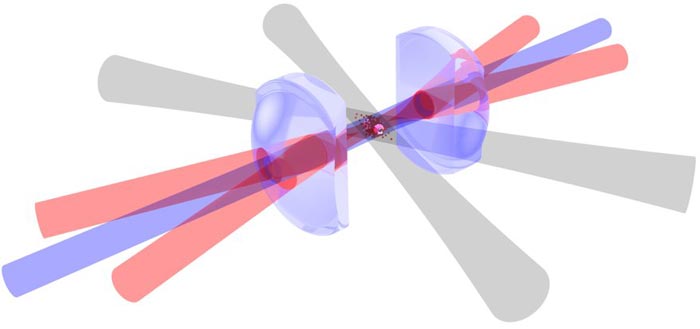
Nano-MRI experiment with sample on diamond surface
A visualization of the nano-NMR experiment, with the sample positioned on the diamond surface.

MRI scanners fill entire hospital rooms. NMR spectrometers are the size of refrigerators. But the physics underpinning both techniques — the behavior of atomic nuclei in magnetic fields — doesn't have to operate at that scale. Two independent research groups have now demonstrated that MRI and NMR can be shrunk down to the nanoscale, potentially opening the door to imaging and chemical analysis of individual molecules.

Both teams achieved this using the same remarkable tool: nitrogen-vacancy (NV) centers in diamond. An NV center is a point defect in the diamond crystal where a nitrogen atom replaces a carbon atom next to a vacancy in the lattice. These defects behave like tiny, exquisitely sensitive magnetic field sensors that can be interrogated with laser light and microwave pulses. Because they operate at room temperature and can be placed extremely close to a sample, they're ideal for detecting the tiny magnetic signals produced by nuclear spins in nearby molecules.

How Nano-MRI Works

In conventional MRI and NMR, large superconducting magnets generate strong, uniform fields that align the nuclear spins in a sample, and then radio waves are used to detect how those spins precess and relax. The signal is averaged over billions of nuclei, which is why the technique works well on macroscopic samples but falls apart at the nanoscale — there simply aren't enough nuclei to produce a detectable signal with conventional equipment.

The NV-center approach sidesteps this problem. By positioning a diamond with a near-surface NV center just nanometers away from a sample, researchers can detect the magnetic noise generated by even a handful of nuclear spins. The NV center's quantum state is sensitive enough to pick up these tiny fluctuations, and optical readout makes the measurement straightforward.

The Road to Molecular Imaging

Both groups describe their results as a first step toward true three-dimensional molecular-scale MRI — the ability to image individual proteins, DNA strands, or other biomolecules atom by atom. That would be a revolutionary capability for structural biology and drug development. The challenge now is improving sensitivity, spatial resolution, and the ability to work with biologically relevant samples.

It's a long way from these proof-of-concept demonstrations to a practical molecular imager, but the physics is there. The question is whether the engineering can catch up.


Source: Physics World